


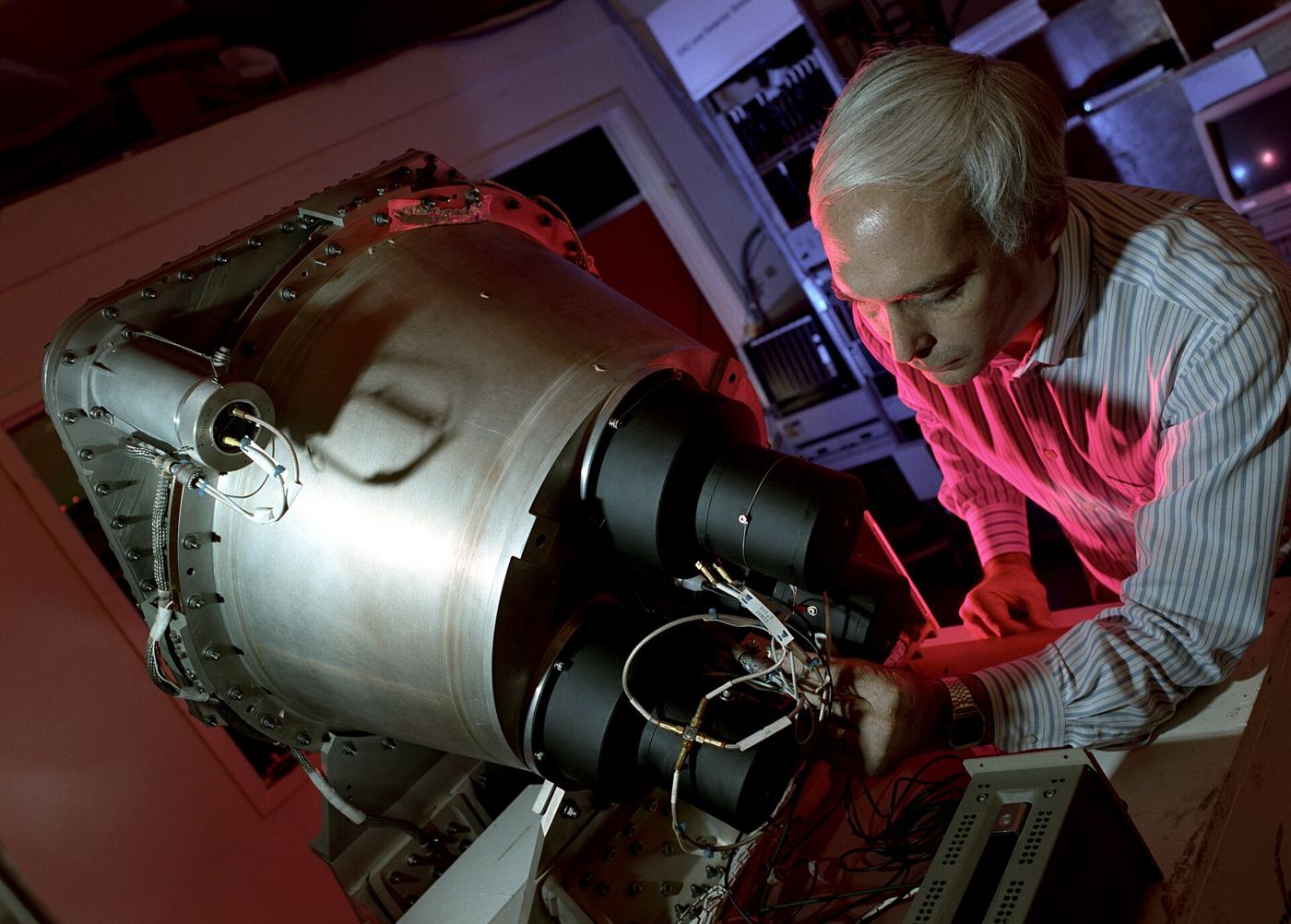
NASA’s Swift Observatory has re-entered Earth’s atmosphere after nearly 22 years of hunting the universe’s most violent explosions, falling back over Indonesia on 6 November 2026. The spacecraft, formally called the Neil Gehrels Swift Observatory, launched on 20 November 2004 from Cape Canaveral aboard a Delta II rocket, on a mission designed to last just two years. Instead it worked for more than two decades, detecting gamma-ray bursts, the brightest explosions in the universe, and slewing its telescopes to study them within a minute. Swift located more than 1,000 gamma-ray bursts and helped astronomers understand the mergers of neutron stars, the deaths of massive stars and the behaviour of black holes. Its long life made it one of the most productive space telescopes ever flown.
What the Evidence Shows
Gamma-ray bursts are flashes of high-energy light that can outshine entire galaxies for a few seconds, and Swift was built to catch them fast. Its Burst Alert Telescope watched a wide patch of sky, and when it spotted a burst the spacecraft turned itself within a minute to aim its X-ray and ultraviolet telescopes at the fading afterglow. That speed let astronomers measure distances, identify host galaxies and piece together what causes the bursts. Swift also chased the afterglows of gravitational wave events, including the neutron star merger of 2017, and monitored comets, supernovae and flaring stars. The observatory’s fall ends an era, but its archive of more than two decades of data will keep astronomers busy for years, and its work continues in the hands of newer missions. Reporting and analysis from sources such as Nature track the same developments, and specialists following the Swift Observatory say the direction is now consistent across independent lines of evidence.
The Wider Context
The wider context is a research landscape in which replication and open data now decide reputations. Findings connected to the Swift Observatory are being checked by independent groups with shared datasets, and the teams involved publish their methods in full so rivals can test every step. That discipline is slower than a headline cycle, but it is why results in this area increasingly survive first contact with scrutiny.
What Happens Next
What happens next in the story of the Swift Observatory will be decided by follow-up work already under way: larger samples, longer observation and instruments that have not yet come online. The researchers involved are unusually united on one point, that the current results justify the next investment of time and money. Readers will not have to wait long for the first tests of that claim. You can follow related developments in our coverage of science.
None of this will be settled by a single announcement, study or product launch. The pattern to watch is accumulation: independent confirmations, honest reporting of failures and steady improvement in the underlying numbers. Readers who follow those signals, rather than the loudest claim of the week, will understand this subject better than most of the commentary surrounding it suggests is possible.
