


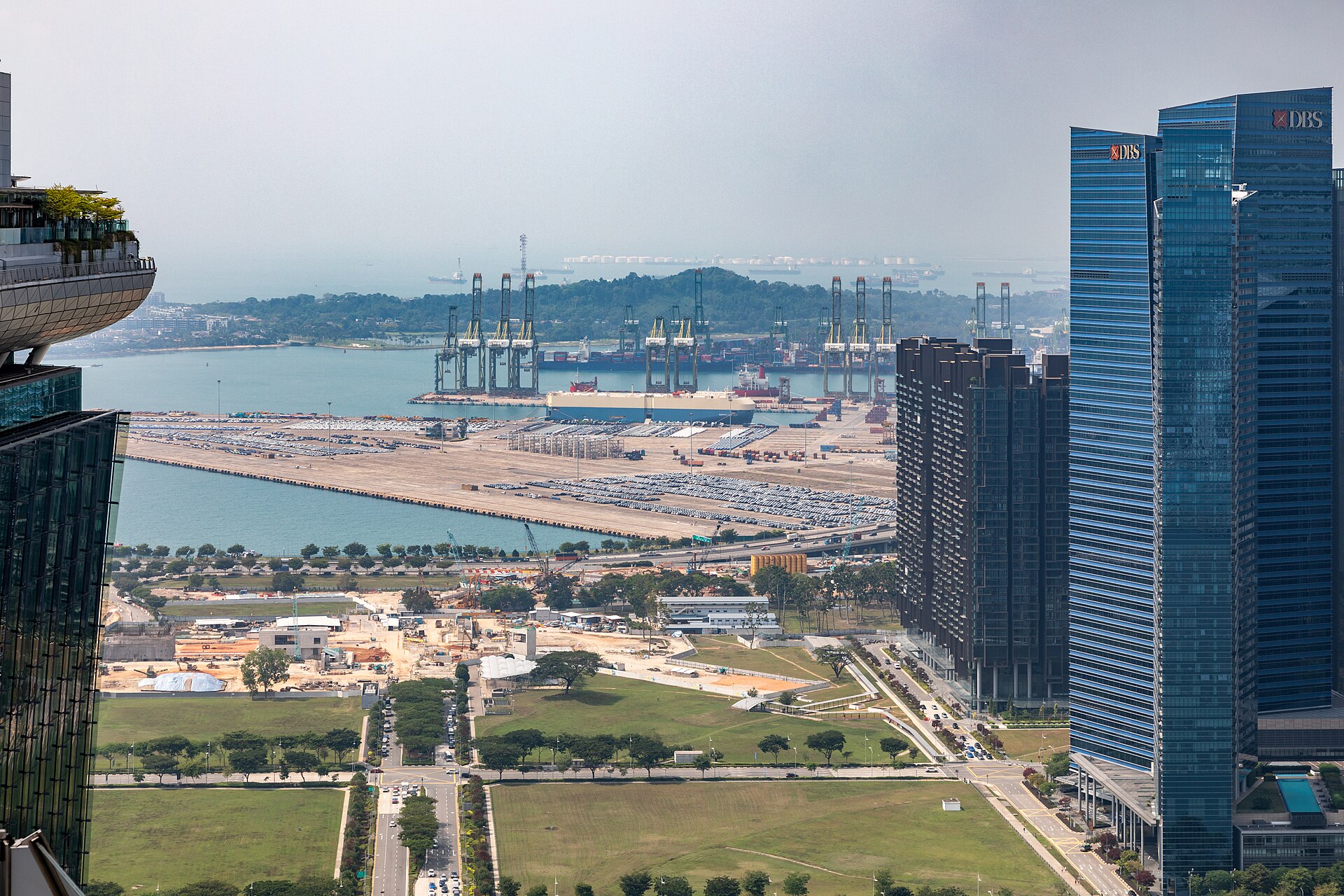
Shipping moves about ninety per cent of world trade and produces roughly three per cent of global emissions — a share that has resisted decades of efficiency gains because the industry runs on cheap, dirty fuel oil. Green shipping corridors are the sector’s current answer to that deadlock: specific routes between ports where cleaner fuels, new vessels and supporting infrastructure are developed together, so that no shipowner, fuel supplier or port has to gamble alone on being first.
Few ports have more at stake, or more to offer, than Singapore — the world’s busiest transshipment hub and its largest bunkering port, where ships refuel. Reporting by the BBC and others on maritime decarbonisation follows the city’s moves closely. Our homepage coverage and Breaking News reporting explain how corridors work, which fuels are contesting the future, and what Singapore’s bet means for Asian trade.
How a Corridor Works
A corridor begins as an agreement: two or more ports, plus shipping lines, fuel producers and financiers, commit to a route — Singapore to Rotterdam, say, or across the Pacific — and coordinate the pieces a zero-emission service needs. Vessels able to burn methanol or ammonia are ordered for that route; fuel production and storage are built at both ends; safety rules for handling toxic or flammable new fuels are harmonised; and cargo owners willing to pay a green premium sign the contracts that make the economics survivable.
Dozens of corridors have been announced worldwide, at very different stages of reality. The honest ones publish fuel volumes, vessel deployments and dates; the decorative ones remain photographs of memoranda. Singapore features in several of the serious efforts, including partnerships with Rotterdam, Los Angeles and Japanese ports — routes chosen because cargo volumes are high, both ends are capable, and the learning will transfer to the wider fleet.
The Fuel Contest: Methanol, Ammonia and the Incumbent
Methanol leads the early race because it is liquid at ambient temperature, engines for it exist, and ‘green’ versions can be made from biomass or captured carbon and renewable hydrogen. Its drawbacks — half the energy density of fuel oil, and green supply that is still tiny — are engineering problems rather than deal-breakers. Ammonia tempts with zero carbon at the point of use and an existing global fertiliser trade, but it is toxic, its engines are newer, and burning it badly can emit nitrous oxide, a potent greenhouse gas.
Singapore is hedging across the contest, as a bunkering hub rationally should: licensing methanol suppliers, running ammonia-handling trials with exhaustive safety cases, electrifying harbour craft and testing ship-to-ship transfers of each fuel. The port’s regulators treat the safety work as the product — a port that can prove it handles ammonia safely will sell that competence to every shipping line planning the transition.
Why It Matters Beyond the Port
Corridors matter because shipping’s transition cannot be solved ship by ship. Fuel producers need guaranteed demand, owners need guaranteed fuel, ports need guaranteed traffic; corridors manufacture those guarantees on a few routes first, create the standards and cost curves, and then let ordinary competition do the rest. Singapore’s wager is that being the place where the standards were proven is worth more than being merely a place ships stop.
For the city, the stakes include thousands of maritime jobs and its claim to remain Asia’s indispensable port as trade routes are redrawn by decarbonisation. The cranes will keep moving boxes either way. The question corridors answer is what the ships beneath them burn — and who supplies it. On current evidence, Singapore intends the answer to be: increasingly, something cleaner, supplied here. Cargo owners, for their part, are beginning to report transport emissions to customers, which turns a corridor’s green premium from a marketing claim into a number that appears in annual reports and procurement decisions.
